Short answer: Indian organizations should prioritize vulnerabilities using threat intelligence, asset context, exploitability modeling, and security control validation to reduce breach risk. Focus on exposures that are actually exploited and impact critical business functions.
TL;DR
- Use threat intelligence for real-world exploitation data
- Consider asset context and business criticality
- Apply exploitability modeling for statistical risk
- Validate security controls for effective remediation
What happened?
This is about prioritizing cybersecurity vulnerabilities. Organizations often fix high-severity issues first, but many are never exploited. The new approach uses threat intelligence, asset context, exploitability modeling, and security control validation to focus on the exposures that are actually risky. This helps reduce the chances of a breach and saves time on less critical issues.
- Vulnerability
- A mistake or weakness in software that an attacker can misuse.
- Data breach
- When private information is stolen or exposed to people who should not see it.
Key facts
| Reported by | The Hacker News |
|---|---|
| Date reported | 03 Nov 2026 |
How it works
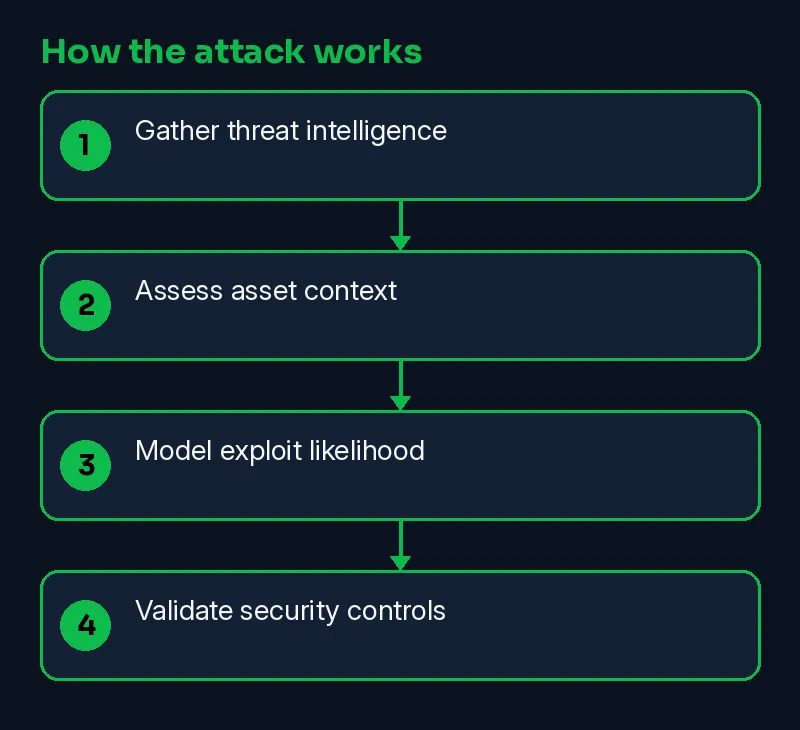
In cybersecurity, prioritizing exposures means focusing on the most dangerous risks. Companies often use severity scores, but Gartner suggests using threat intelligence, asset context, exploitability models, and security control validation to reduce breaches by 70%.
- Gather threat intelligence
- Assess asset context
- Model exploit likelihood
- Validate security controls
Timeline
| Date | Event | Source |
|---|---|---|
| 2026-11-03 | Reported by The Hacker News | The Hacker News |
| 2026-11-07 | This Skillmate explainer published | Skillmate |
How to fix it
- If you have an account with the affected company, change that password and any reused copies of it.
- Turn on two-factor authentication (a second login step) wherever the service offers it.
- Expect phishing emails or calls that use the exposed details; verify requests through official channels.
How to detect it
Signs to watch for:
- Login alerts from new devices or locations on the affected account.
- Password-reset emails you did not ask for.
- Phishing messages that quote your real account details.
What is confirmed
- Reported by The Hacker News
Why it matters
This matters because it helps companies reduce risks by focusing on the most critical vulnerabilities. Using these four elements can significantly lower breach likelihood, benefiting both businesses and users globally.
Learn the skills behind this story
Want to understand attacks like this and defend against them? Join Skillmate cybersecurity training or practise hands-on in Skillmate Labs.
FAQ
What is threat intelligence?
Threat intelligence provides information about potential attackers and their methods. It helps teams focus on vulnerabilities that are actually being exploited.
Why is asset context important?
Asset context shows which systems are critical to business operations. It helps prioritize vulnerabilities affecting high-value assets over less important ones.
What does exploitability modeling do?
Exploitability modeling predicts how likely a vulnerability is to be exploited, using factors like exploit complexity and disclosure-to-exploitation timelines.
Sources
- The 4 Elements of Exposure Prioritization and How to Operationalize Them (The Hacker News)
How we wrote this: facts come from the sources above. An on-prem AI model drafted the plain-English parts and every sentence was checked against the sources; unsupported sentences were removed. MITRE mapping is our own judgement.