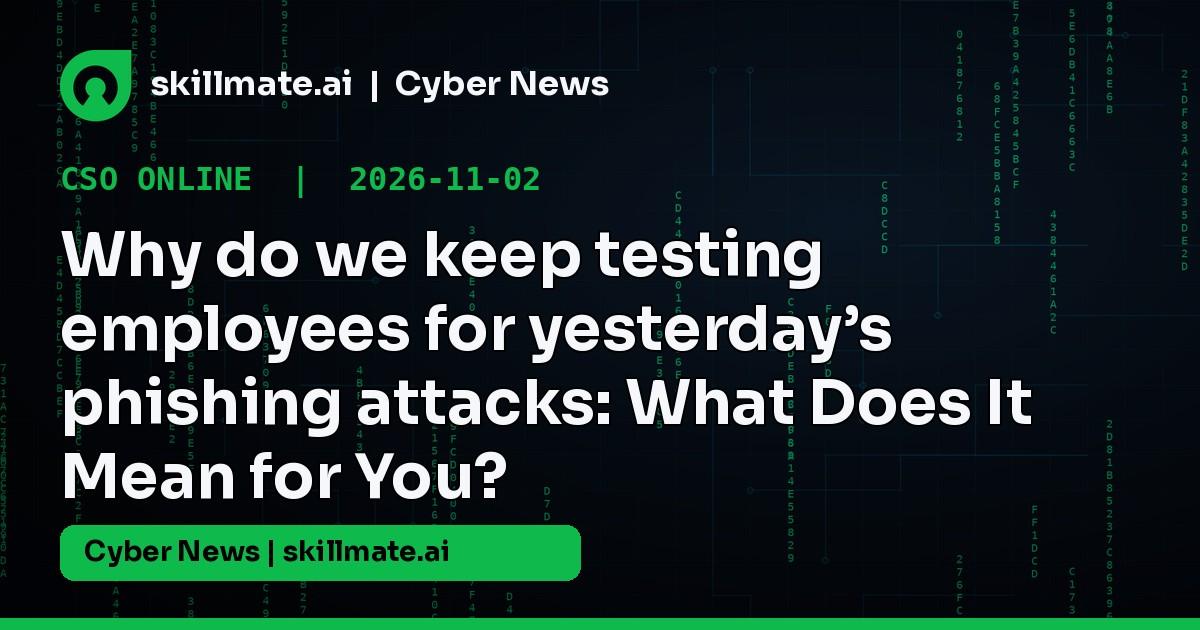
Short answer: Phishing attacks are becoming more advanced, so old training methods may not work. Employees should stay vigilant and report suspicious messages.
TL;DR
- Phishing attacks are getting more sophisticated.
- Old training methods may not be enough.
- Employees should report suspicious messages.
- Verify unusual requests before acting.
What happened?
Phishing is a type of cyber attack where attackers trick people into giving away sensitive information. They do this by sending fake emails or messages that look legitimate. Recently, attackers are using advanced technology like AI to make these messages more convincing. This means old training methods, which taught employees to look for simple mistakes, may not be effective anymore. To stay safe, employees should be trained to verify any unusual requests and report suspicious messages promptly.
- Phishing
- Fake messages or websites that trick people into giving passwords or money.
Key facts
| Reported by | CSO Online |
|---|---|
| Date reported | 02 Nov 2026 |
How it works
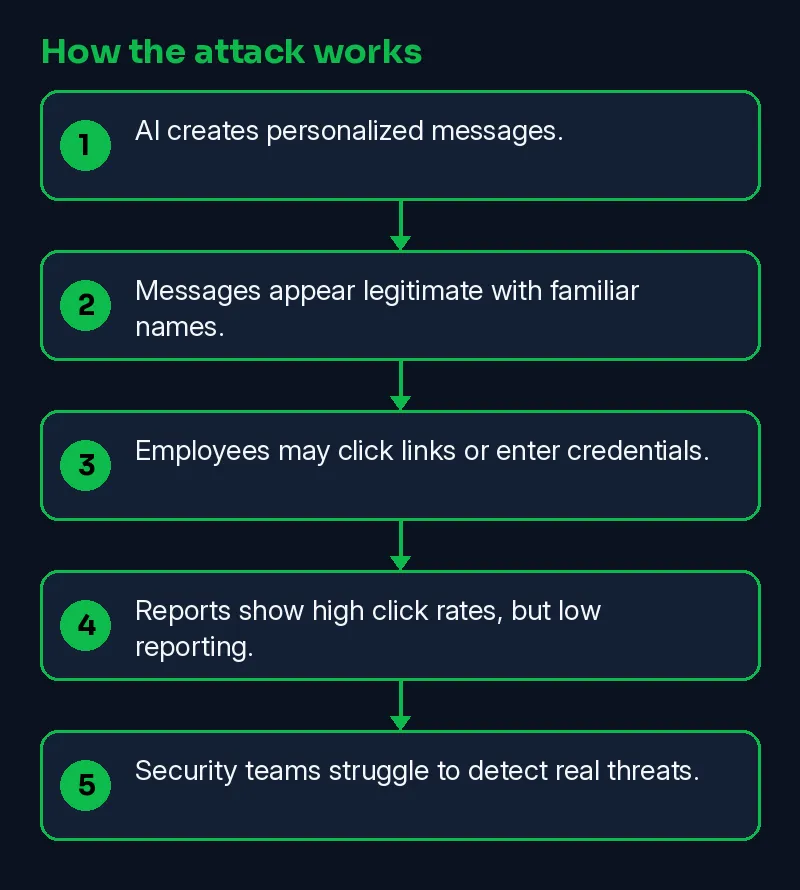
Phishing attacks use AI to create convincing messages. AI generates familiar names, business context, and professional language. Employees may not recognize the scam, thinking it's legitimate.
- AI creates personalized messages.
- Messages appear legitimate with familiar names.
- Employees may click links or enter credentials.
- Reports show high click rates, but low reporting.
- Security teams struggle to detect real threats.
Skillmate analyst mapping (our judgement, not from the vendor):
- T1566 Phishing
Timeline
| Date | Event | Source |
|---|---|---|
| 2026-11-02 | Reported by CSO Online | CSO Online |
| 2026-11-02 | This Skillmate explainer published | Skillmate |
How to fix it
- Check the sender address and the real link destination before clicking.
- Never share one-time passwords or login codes with anyone.
- Report the message to your IT team or the service's official abuse address.
How to detect it
Signs to watch for:
- Messages that push urgency, payment changes or login links.
- Sender domains that look like, but are not, the real company.
- Logins to your accounts right after someone clicked a link.
What is confirmed
- Reported by CSO Online
Why it matters
AI phishing makes it harder to spot scams. Companies need better training. Employees must verify requests and report suspicious messages. Click rates alone are not enough. Real-world security depends on quick reporting and effective action.
Learn the skills behind this story
Want to understand attacks like this and defend against them? Join Skillmate cybersecurity training or practise hands-on in Skillmate Labs.
FAQ
Why is AI making phishing harder to detect?
AI helps attackers craft more convincing phishing messages, making it harder to spot. It can personalize emails and use professional language, tricking employees who rely on basic signs like spelling mistakes.
How can we improve phishing awareness training?
Training should focus on verification and checking unusual requests. It should teach employees to report suspicious messages through approved channels quickly.
Why shouldn’t we rely only on click rates in phishing tests?
Click rates don’t show if employees are actually reporting suspicious messages. A low click rate but high reporting rate means better security awareness.
Sources
How we wrote this: facts come from the sources above. An on-prem AI model drafted the plain-English parts and every sentence was checked against the sources; unsupported sentences were removed. MITRE mapping is our own judgement.