
Short answer: MEXC, a large crypto exchange, was banned by the US for facilitating illicit activities.
TL;DR
- MEXC banned for sanctions evasion and cybercrime links.
- US financial institutions and users affected.
- Check for sanctions lists before trading.
- Use reputable exchanges with strong AML policies.
What happened?
MEXC is a crypto exchange that was banned by the US for allowing illegal transactions. It is linked to cybercrime and sanctions evasion.
- Ransomware
- Malware that locks or steals files and demands money to give them back.
Key facts
| Reported by | BleepingComputer |
|---|---|
| Date reported | 09 Nov 2026 |
How it works
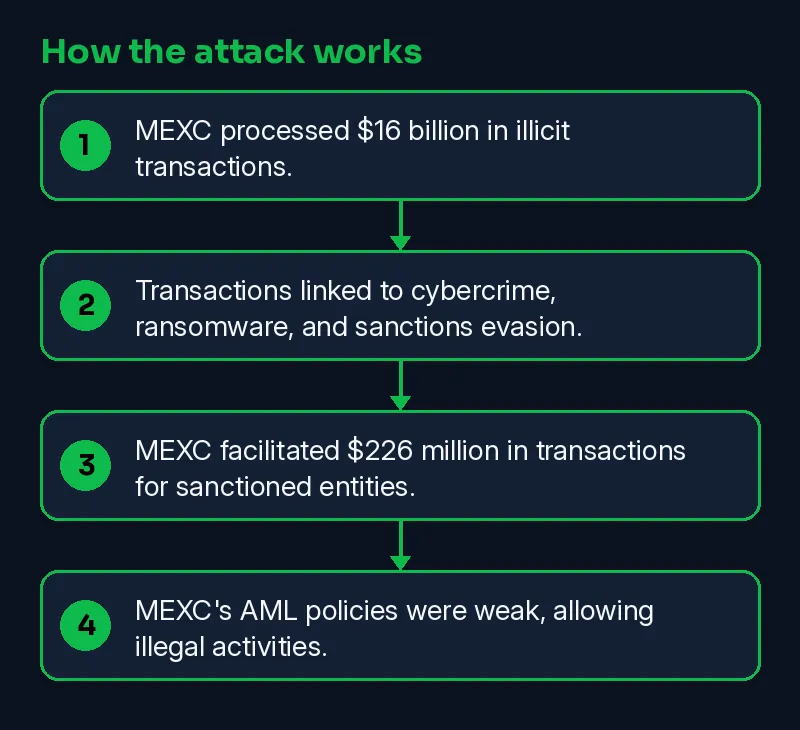
MEXC allowed transactions that violated US sanctions and were linked to cybercrime, such as ransomware and scam payments. This undermined financial systems' integrity and allowed illegal activities.
- MEXC processed $16 billion in illicit transactions.
- Transactions linked to cybercrime, ransomware, and sanctions evasion.
- MEXC facilitated $226 million in transactions for sanctioned entities.
- MEXC's AML policies were weak, allowing illegal activities.
Skillmate analyst mapping (our judgement, not from the vendor):
- T1566 Phishing
Timeline
| Date | Event | Source |
|---|---|---|
| 2026-11-09 | Reported by BleepingComputer | BleepingComputer |
| 2026-11-27 | This Skillmate explainer published | Skillmate |
How to fix it
- If you keep crypto on an exchange, move long-term holdings to a wallet you control and turn on withdrawal address allow-lists.
- Use app-based or hardware-key two-factor authentication on exchange and wallet accounts, not SMS codes.
- Treat unexpected job offers, coding tests or trading apps sent over chat as suspicious; they are a common lure in crypto theft.
- Companies holding crypto: require more than one approver for large transfers and keep signing keys on separate, locked-down devices.
How to detect it
Signs to watch for:
- Withdrawals to new addresses, or at unusual sizes or times.
- New devices, API keys or withdrawal addresses added to exchange or wallet accounts.
- Developer tools, packages or 'trading' apps installed right after a recruiter or job chat.
What is confirmed
- Reported by BleepingComputer
Why it matters
This matters because it weakens trust in cryptocurrency exchanges and highlights the need for robust AML measures. Companies and users must ensure their financial systems are secure.
Learn the skills behind this story
Want to understand attacks like this and defend against them? Join Skillmate cybersecurity training or practise hands-on in Skillmate Labs.
FAQ
What does FinCEN mean by sanctions evasion?
Sanctions evasion means avoiding or breaking international laws that prohibit financial transactions with certain entities or countries.
What actions can US financial institutions take after this ban?
US financial institutions may face secondary sanctions or enforcement actions for transferring funds to or from MEXC Global.
How did MEXC respond to the ban?
MEXC said it is reviewing its sanctions and AML controls and engaging with FinCEN and other authorities.
Sources
- US bans MEXC crypto exchange over sanctions evasion, cybercrime links (BleepingComputer)
How we wrote this: facts come from the sources above. An on-prem AI model drafted the plain-English parts and every sentence was checked against the sources; unsupported sentences were removed. MITRE mapping is our own judgement.
Watch today's video brief: https://youtu.be/fzBFP4ffN68