
Short answer: Russian hackers targeted iPhones and Android devices using malicious code on websites. Users in Ukraine, US, and Europe were affected.
TL;DR
- Russian hackers used fake websites to steal data.
- Targeted users in Ukraine, US, and Europe.
- Devices running old iOS 16 or 18.5 were more vulnerable.
- Keep devices updated to avoid getting hacked.
What happened?
Russian hackers used zero-click attacks to steal data from iPhones and Android devices. They planted malicious code on fake websites and compromised analytics services. The attacks were designed to steal information without users needing to click or download anything. Apple and Google had already patched the vulnerabilities before the attacks. Users should keep their devices updated to stay secure.
- Vulnerability
- A mistake or weakness in software that an attacker can misuse.
- Malware
- Harmful software made to spy, steal or damage.
Key facts
| Reported by | The Record |
|---|---|
| Date reported | 05 Nov 2026 |
How it works
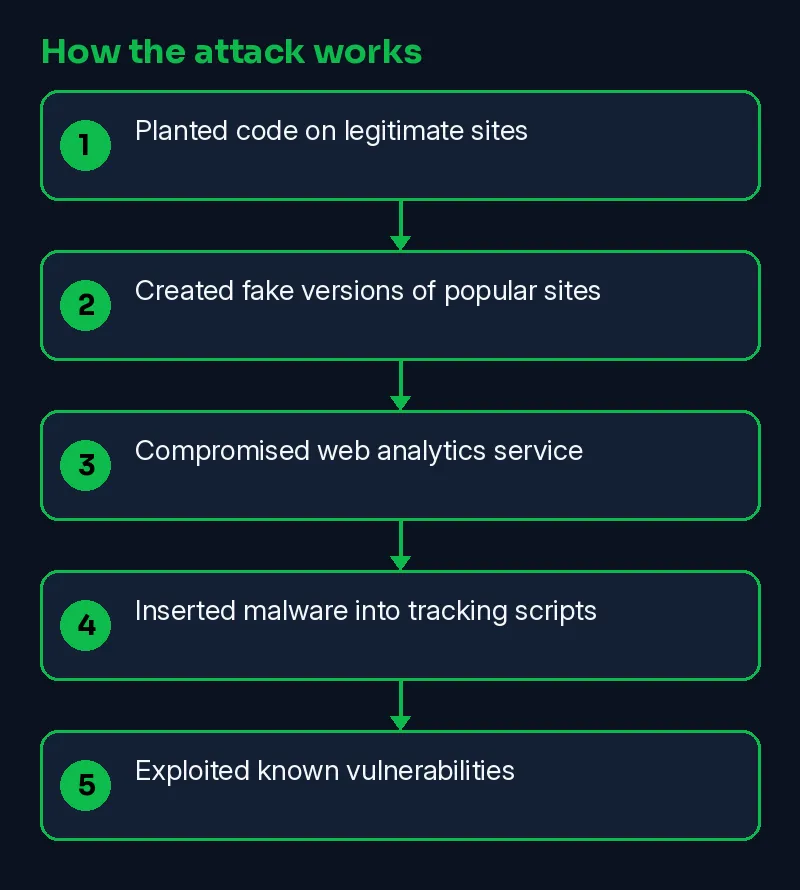
Hackers planted malicious code on websites and used fake versions of popular sites. They compromised a web analytics service, inserting malware into tracking scripts. The malware exploited known vulnerabilities to steal data from iPhones and Android devices. The attacks did not require users to click or download anything.
- Planted code on legitimate sites
- Created fake versions of popular sites
- Compromised web analytics service
- Inserted malware into tracking scripts
- Exploited known vulnerabilities
Timeline
| Date | Event | Source |
|---|---|---|
| 2026-11-05 | Reported by The Record | The Record |
| 2026-11-24 | This Skillmate explainer published | Skillmate |
How to fix it
- Keep systems and network devices updated and follow vendor security notices.
- Make sure an incident response contact and plan exist before an attack happens.
- Ask your service providers which protections they offer, and test them.
How to detect it
Defenders should look for signs of unusual web traffic, especially from popular websites.
What is confirmed
- Reported by The Record
Why it matters
This matters because it highlights the risk of using outdated software and the importance of keeping devices and services updated. It also shows how sophisticated cyber espionage can target a wide range of users, posing a threat to national security and personal data.
Learn the skills behind this story
Want to understand attacks like this and defend against them? Join Skillmate cybersecurity training or practise hands-on in Skillmate Labs.
FAQ
What is APT29?
APT29 is an espionage group reportedly linked to Russia's foreign intelligence service (SVR).
How did the attackers target iPhones and Android devices?
They planted malicious code on legitimate websites and created fake versions of popular websites. They also compromised a Ukrainian web analytics service to target visitors.
What kind of information could hackers steal?
Hackers could steal passwords, messages, emails, browser data, and other sensitive information from iPhones and Android devices.
How did the attackers exploit vulnerabilities?
They used known vulnerabilities in older versions of iOS and Chrome, but not zero-day exploits, as the companies had already patched these vulnerabilities.
Sources
- Russian state-linked hackers target iPhone, Android devices in zero-click espionage campaign (The Record)
How we wrote this: facts come from the sources above. An on-prem AI model drafted the plain-English parts and every sentence was checked against the sources; unsupported sentences were removed. MITRE mapping is our own judgement.
Watch today's video brief: https://youtu.be/yaK-CF987xg