
Short answer: Obsidian Security introduced a new feature to control AI agents' actions in real-time, helping prevent risky behavior. This is important for enterprises using AI tools and services.
TL;DR
- Obsidian Security added runtime policy enforcement
- Helps control AI agents' actions
- Protects against risky behavior
- Important for enterprises using AI tools
What happened?
Obsidian Security's new feature, the Runtime Policy Decision Engine, allows security teams to control AI agents' actions in real-time. This helps prevent risky actions from causing damage to the business.
Key facts
| Reported by | Help Net Security |
|---|---|
| Date reported | 11 Nov 2026 |
How it works
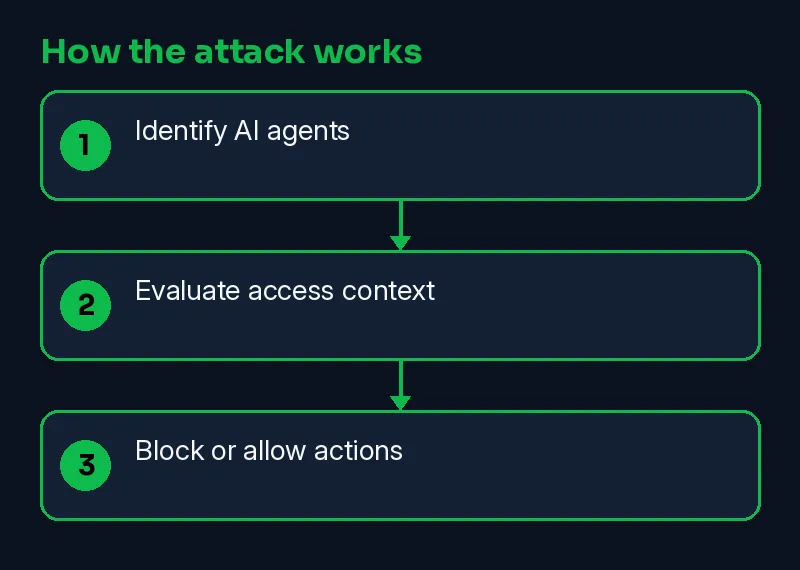
Obsidian Security's Runtime Policy Decision Engine controls AI agents. If not, it may require human approval.
- Identify AI agents
- Evaluate access context
- Block or allow actions
Timeline
| Date | Event | Source |
|---|---|---|
| 2026-11-11 | Reported by Help Net Security | Help Net Security |
| 2026-11-29 | This Skillmate explainer published | Skillmate |
How to fix it
- Keep systems and network devices updated and follow vendor security notices.
- Make sure an incident response contact and plan exist before an attack happens.
- Ask your service providers which protections they offer, and test them.
What is confirmed
- Reported by Help Net Security
Why it matters
This helps secure AI agents used by developers and third-party apps. It prevents unauthorized actions and protects sensitive data, crucial for businesses in India and globally.
Learn the skills behind this story
Want to understand attacks like this and defend against them? Join Skillmate cybersecurity training or practise hands-on in Skillmate Labs.
FAQ
What is an AI agent?
An AI agent is a tool that uses AI to automate tasks and can access sensitive data. Obsidian Security uses this term for tools like Copilot and Codex.
How does Obsidian’s Runtime Policy Decision Engine work?
It evaluates AI agent actions against centrally managed policies, using context from apps, identity systems, and data labels to decide whether to allow or block actions.
What are the main benefits of Obsidian’s new capabilities?
They allow centralized control over AI agents, reducing risk and improving security without hindering developer productivity.
Sources
- Obsidian expands AI agent security with runtime policy enforcement (Help Net Security)
How we wrote this: facts come from the sources above. An on-prem AI model drafted the plain-English parts and every sentence was checked against the sources; unsupported sentences were removed. MITRE mapping is our own judgement.
Watch today's video brief: https://youtu.be/o6618M4sH-8