
Short answer: A new zero-day exploit called SignDrop lets hackers gain SYSTEM privileges. It affects 80% of Windows devices. Check your CLFS authentication mode and run the PoC exploit to see if you're vulnerable.
TL;DR
- New SignDrop exploit gives hackers SYSTEM access.
- Affects Windows 11 26H2, Windows 11 26H2 Experimental, and Windows Server 2025 Experimental.
- 80% of Windows installations are potentially vulnerable.
- Run PoC exploit or check CLFS authentication mode to test.
- Wait for Microsoft patch to fix the issue.
What happened?
SignDrop is a new zero-day exploit that targets a flaw in how Windows handles log files. It lets attackers gain SYSTEM privileges by exploiting the way CLFS (Common Log File System) creates authentication files. This can bypass security measures and allow unauthorized access. Since there's no official fix yet, you should check your system's vulnerability and wait for Microsoft to release a patch.
- Vulnerability
- A mistake or weakness in software that an attacker can misuse.
- Patch
- A software update from the maker that fixes a security weakness.
- Zero-day
- A weakness attackers use before the maker has released a fix.
- Exploit
- Code or steps that take advantage of a weakness.
Key facts
| Reported by | BleepingComputer |
|---|---|
| Date reported | 12 Nov 2026 |
How it works
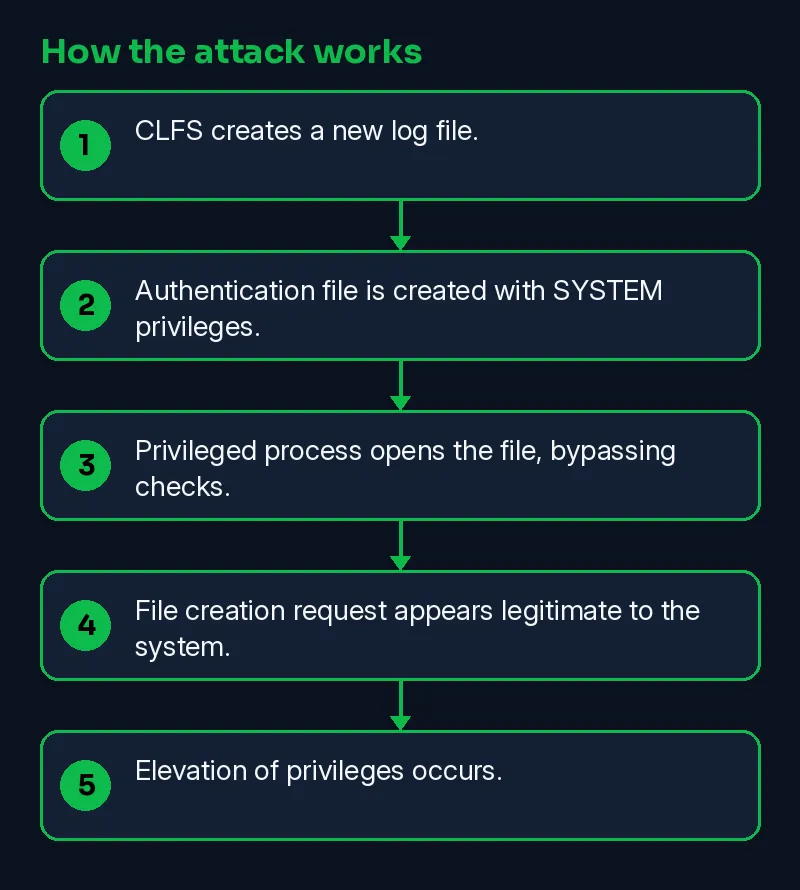
A new Windows flaw called SignDrop allows attackers to gain SYSTEM privileges. It exploits how the CLFS driver handles authentication files, which can be abused by privileged processes like Windows Defender.
- CLFS creates a new log file.
- Authentication file is created with SYSTEM privileges.
- Privileged process opens the file, bypassing checks.
- File creation request appears legitimate to the system.
- Elevation of privileges occurs.
Timeline
| Date | Event | Source |
|---|---|---|
| 2026-11-12 | Reported by BleepingComputer | BleepingComputer |
| 2026-11-12 | This Skillmate explainer published | Skillmate |
How to fix it
- Keep systems and network devices updated and follow vendor security notices.
- Make sure an incident response contact and plan exist before an attack happens.
- Ask your service providers which protections they offer, and test them.
How to detect it
Defenders can look for signs like a SYSTEM shell spawning if the PoC exploit is run. Check the CLFS authentication mode in the registry to see if the machine is vulnerable.
What is confirmed
- Reported by BleepingComputer
Why it matters
This vulnerability can let attackers gain SYSTEM access, compromising systems. Companies and users must check their systems and wait for Microsoft's patch to protect against SignDrop attacks.
Learn the skills behind this story
Want to understand attacks like this and defend against them? Join Skillmate cybersecurity training or practise hands-on in Skillmate Labs.
FAQ
What is the SignDrop exploit?
SignDrop is a new Windows zero-day exploit that allows hackers to gain SYSTEM privileges, exploiting a flaw in the CLFS driver.
Is there a fix available yet?
No, there is currently no solution except waiting for a patch from Microsoft. Disabling the CLFS mitigation would expose devices to other attacks.
What is CLFS?
CLFS stands for Common Log File System. It is a component of Windows that manages log files and can be exploited by the SignDrop vulnerability.
Sources
- New Windows SignDrop zero-day gives hackers SYSTEM privileges (BleepingComputer)
How we wrote this: facts come from the sources above. An on-prem AI model drafted the plain-English parts and every sentence was checked against the sources; unsupported sentences were removed. MITRE mapping is our own judgement.