
Short answer: Meta paid $1.2 million in bug bounties for its Muse AI agent, including $300,000 for a pre-launch flaw. Users and developers should stay vigilant and report bugs.
TL;DR
- Meta paid $300,000 for a pre-launch flaw in its AI agent, Muse.
- The flaw exposed data on internal test systems.
- Meta paid up to $300,000 for valid reports.
- Muse is a personal AI agent that acts on a user's behalf.
What happened?
Muse is an AI assistant from Meta that helps users manage their online activities. It is designed to act on behalf of the user in various services like email and messaging. Meta offered a high bug bounty to find and fix security issues in Muse, with the highest reward being $300,000 for a pre-launch flaw that exposed data on internal test systems.
- Vulnerability
- A mistake or weakness in software that an attacker can misuse.
Key facts
| Reported by | SecurityWeek |
|---|---|
| Date reported | 04 Nov 2026 |
| Amount reported | $1.2 million (as reported by SecurityWeek) |
How it works
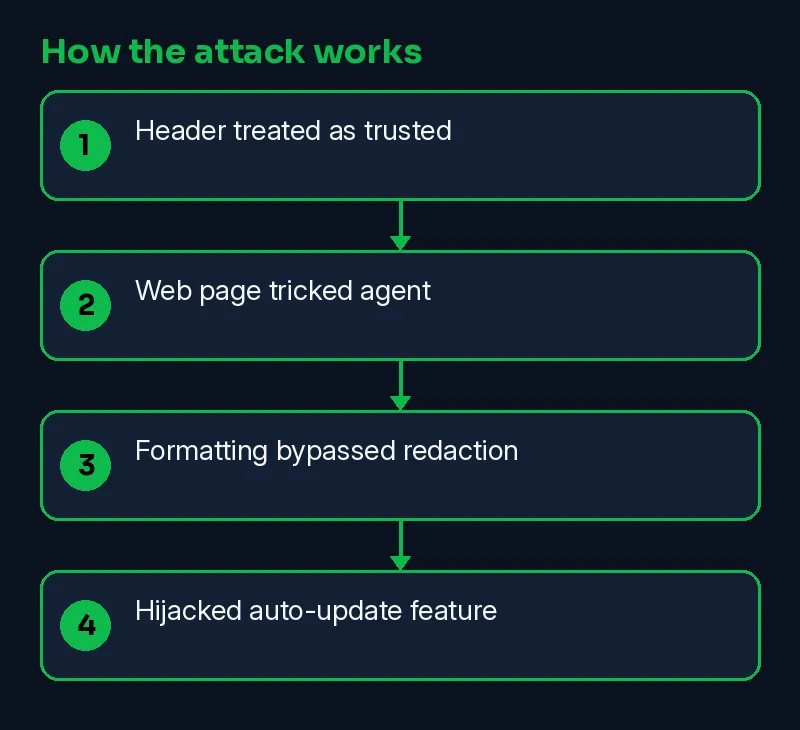
Meta's Muse AI agent runs in a user’s own virtual machine and connects to services like email and messaging. Researchers found a flaw where a header treated as trusted allowed access to data on pre-release systems. Another flaw let a web page trick the agent into executing actions. A third flaw bypassed email redaction filters, and a fourth allowed an attacker to hijack the auto-update feature.
- Header treated as trusted
- Web page tricked agent
- Formatting bypassed redaction
- Hijacked auto-update feature
Timeline
| Date | Event | Source |
|---|---|---|
| 2026-11-04 | Reported by SecurityWeek | SecurityWeek |
| 2026-11-09 | This Skillmate explainer published | Skillmate |
How to fix it
- Keep systems and network devices updated and follow vendor security notices.
- Make sure an incident response contact and plan exist before an attack happens.
- Ask your service providers which protections they offer, and test them.
How to detect it
Look for unusual requests from the AI agent, like unexpected emails or messages. A false positive could be a legitimate user doing a one-time action.
What is confirmed
- SecurityWeek reports the amount as $1.2 million
- Reported by SecurityWeek
- Reported by bugbounty.meta.com
Why it matters
These vulnerabilities could let attackers gain access to sensitive user data and control AI agents. Companies and users must ensure robust security measures to protect personal information and AI systems. Students should learn about these risks to better secure AI applications.
Learn the skills behind this story
Want to understand attacks like this and defend against them? Join Skillmate cybersecurity training or practise hands-on in Skillmate Labs.
FAQ
What is the Muse AI agent?
Muse is a personal AI agent from Meta that helps manage user accounts and services like email and messaging.
How much did Meta pay in bug bounties?
Meta paid around $1.2 million in bug bounties for the Muse AI agent.
What was the biggest bug bounty reward?
The biggest reward was $300,000 for a pre-launch flaw that exposed data on internal test systems.
Related Skillmate posts
Sources
- Meta Shares Top Muse Bug Bounty Findings as Payouts Reach $1.2 Million (SecurityWeek)
- Meta (primary source) (bugbounty.meta.com)
How we wrote this: facts come from the sources above. An on-prem AI model drafted the plain-English parts and every sentence was checked against the sources; unsupported sentences were removed. MITRE mapping is our own judgement.