
Short answer: Binance denied a data breach. Users should not share passwords or private keys.
TL;DR
- Binance denied data breach claims.
- ShinyHunters claimed to have 335 million user records.
- Binance said no evidence of breach.
- Users should be cautious of phishing.
What happened at Binance?
Binance denied the claim, stating no evidence of a breach. Users are advised to protect their passwords and private keys.
- Data breach
- When private information is stolen or exposed to people who should not see it.
Key facts
| Reported by | BleepingComputer |
|---|---|
| Date reported | 09 Nov 2026 |
How it works
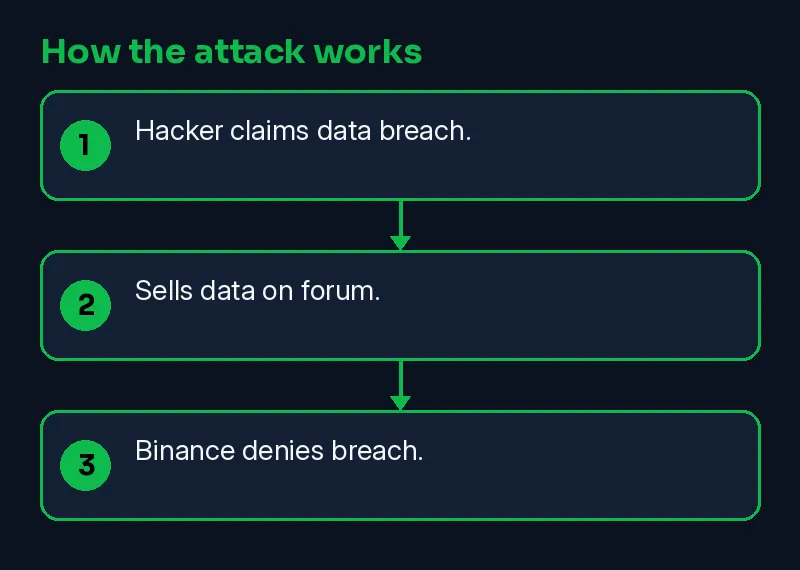
They offer the data for sale, including user information and private keys.
- Hacker claims data breach.
- Sells data on forum.
- Binance denies breach.
Skillmate analyst mapping (our judgement, not from the vendor):
- T1566 Phishing
Timeline
| Date | Event | Source |
|---|---|---|
| 2026-11-09 | Reported by BleepingComputer | BleepingComputer |
| 2026-11-28 | This Skillmate explainer published | Skillmate |
How to fix it
- If you keep crypto on an exchange, move long-term holdings to a wallet you control and turn on withdrawal address allow-lists.
- Use app-based or hardware-key two-factor authentication on exchange and wallet accounts, not SMS codes.
- Treat unexpected job offers, coding tests or trading apps sent over chat as suspicious; they are a common lure in crypto theft.
- Companies holding crypto: require more than one approver for large transfers and keep signing keys on separate, locked-down devices.
How to detect it
A likely false positive is a claim of a breach from a threat actor who wants to sell stolen data.
Signs to watch for:
- Withdrawals to new addresses, or at unusual sizes or times.
- New devices, API keys or withdrawal addresses added to exchange or wallet accounts.
- Developer tools, packages or 'trading' apps installed right after a recruiter or job chat.
What is confirmed
- Reported by BleepingComputer
Why it matters
This matters because it could lead to scams and phishing. Users should be cautious with personal data and passwords.
Learn the skills behind this story
Want to understand attacks like this and defend against them? Join Skillmate cybersecurity training or practise hands-on in Skillmate Labs.
FAQ
Is Binance really hacked?
Binance denies the claim, saying they found no evidence of a breach. They suspect the data is from users' own devices.
What should I do if I receive a phishing email?
Never share passwords, 2FA codes, seed phrases, or private keys. Be wary of suspicious emails and report them.
What is KYC data?
KYC stands for Know Your Customer. It includes personal information like ID, address, and financial details.
How can I protect my crypto wallet?
Do not share private keys. Use strong, unique passwords and enable 2FA for added security.
Sources
- Binance denies data breach after alleged ShinyHunters claims (BleepingComputer)
How we wrote this: facts come from the sources above. An on-prem AI model drafted the plain-English parts and every sentence was checked against the sources; unsupported sentences were removed. MITRE mapping is our own judgement.
Watch today's video brief: https://youtu.be/fzBFP4ffN68